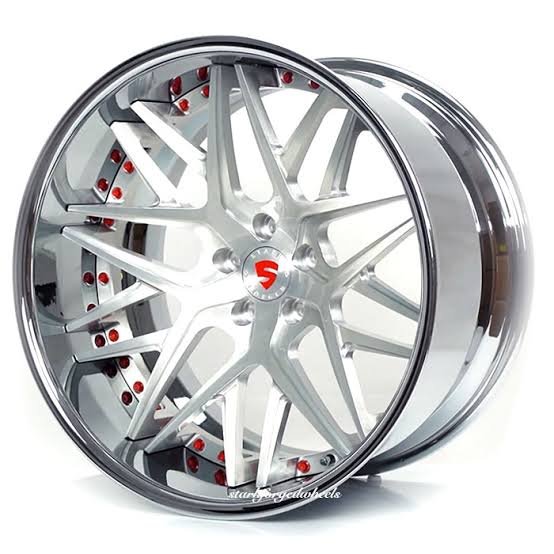
When it comes to improving a vehicle’s performance, appearance, and driving experience, wheels play an important role. Among the different wheel options custom forged wheels available today, custom forged wheels are widely recognized for their strength, lightweight construction, and personalized design possibilities. However, the quality of a forged wheel depends heavily on the material used to manufacture it.
Choosing the right material affects everything from weight and durability to heat resistance, corrosion protection, and overall performance. Understanding the most common materials used in forged wheels can help vehicle owners make better decisions when selecting wheels for daily driving, performance applications, or specialized builds.
Why Material Matters in Forged Wheels
The material used to manufacture a wheel determines many of its most important characteristics. A high-quality material can provide excellent strength while keeping the wheel lightweight. This balance is particularly important because reducing unsprung weight can help improve handling, acceleration, braking, and suspension response.
Forged wheels are produced by applying significant pressure to a solid piece of metal, shaping its internal grain structure and creating a dense, strong wheel. This manufacturing process allows manufacturers to use high-performance materials while achieving precise designs and fitments.
For custom forged wheels, material selection becomes even more important because customers may request specific sizes, offsets, finishes, and performance characteristics.
6061-T6 Aluminum Alloy
One of the most popular materials used for forged wheels is 6061-T6 aluminum alloy. It is valued for its excellent combination of strength, relatively low weight, corrosion resistance, and machinability.
The T6 designation indicates that the alloy has undergone a specific heat-treatment process to improve its mechanical properties. This makes 6061-T6 suitable for demanding automotive applications where strength and reliability are important.
Another advantage is its ability to be precisely machined. Manufacturers can create detailed spoke patterns, lightweight structures, and customized fitments while maintaining the strength required for road use.
For many vehicle owners, 6061-T6 aluminum provides an excellent balance between performance and practicality.
6061 Aluminum Alloy
Standard 6061 aluminum is also commonly used in wheel manufacturing. Although the final properties depend on the exact manufacturing and heat-treatment process, the alloy is popular because of its versatility.
It offers good corrosion resistance and can be machined into complex wheel designs. It is also relatively lightweight compared with traditional steel materials.
Manufacturers can use 6061 aluminum to create wheels in a wide range of diameters, widths, offsets, and finishes. This flexibility makes it especially suitable for customers looking for wheels that combine visual customization with dependable performance.
7075 Aluminum Alloy
For applications where very high strength is a priority, 7075 aluminum alloy can be an attractive option. This alloy contains zinc as a major alloying element and is known for its high strength-to-weight ratio.
7075 aluminum is often associated with demanding engineering and aerospace applications. In wheel manufacturing, its strength characteristics can make it appealing for specialized performance applications.
However, material selection is not simply about choosing the strongest alloy available. Manufacturers must consider factors such as fatigue performance, corrosion behavior, machinability, manufacturing processes, and intended vehicle use.
Therefore, the specific alloy and manufacturing process should always be selected according to the requirements of the wheel application.
Aerospace-Grade Aluminum Alloys
The term “aerospace-grade aluminum” is often used to describe aluminum alloys that meet demanding engineering standards and provide desirable combinations of strength and weight.
Some high-performance wheel manufacturers use aerospace-inspired aluminum alloys to create lightweight forged wheels. The benefit is not necessarily that the wheel is literally an aircraft component, but that the material and engineering approach can provide excellent performance characteristics.
For custom forged wheels, these materials can be useful when the goal is to reduce unnecessary weight without compromising structural integrity.
Why Aluminum Is Preferred
Aluminum is widely preferred for forged wheels because it provides several useful properties in one material. It is lighter than steel, naturally resistant to corrosion, and relatively easy to machine.
Its lower density allows manufacturers to produce wheels that can be significantly lighter than conventional steel alternatives. Less wheel weight can contribute to improved suspension response because the suspension has less unsprung mass to control.
Aluminum also transfers heat effectively. This can be useful around the braking system because wheels can help dissipate heat from components near the wheel assembly.
The Role of Heat Treatment
The material itself is only part of the equation. Heat treatment can significantly influence the final properties of a forged wheel.
Processes such as solution heat treatment and artificial aging can increase the strength and hardness of certain aluminum alloys. Manufacturers carefully control these processes to achieve the desired mechanical properties.
A properly heat-treated alloy can provide a better combination of strength and durability than untreated material. This is one reason reputable wheel manufacturers pay close attention to both alloy selection and production processes.
Forging Improves Material Structure
Forging provides an important advantage because it changes the structure of the metal during manufacturing. A billet of aluminum is subjected to high pressure, causing the material to flow into the desired shape.
This process can create a more consistent and dense structure compared with some casting methods. The resulting material can provide excellent strength and fatigue resistance when properly engineered.
For performance-oriented custom forged wheels, forging allows manufacturers to optimize material distribution. More material can be retained in areas that experience higher loads, while unnecessary material can be removed from less critical areas.
Steel Versus Aluminum for Wheels
Steel has traditionally been used for many automotive wheels because of its durability, affordability, and manufacturing simplicity. However, steel is considerably heavier than aluminum.
For drivers interested in performance and customization, aluminum forged wheels can offer significant advantages in weight reduction and design flexibility.
Steel can still be appropriate for certain applications, especially where cost and ruggedness are the primary considerations. However, aluminum alloys are generally more suitable for high-end forged wheel manufacturing.
Magnesium and Other Specialized Materials
Magnesium alloys are another option sometimes associated with high-performance wheels. Magnesium is lighter than aluminum and can provide an impressive weight advantage.
However, magnesium requires careful engineering and protection because it has different corrosion characteristics and manufacturing requirements. It is therefore more specialized than common aluminum wheel materials.
Carbon fiber is another advanced material used in some high-performance wheel applications. Carbon fiber wheels can offer exceptional weight savings and stiffness, but their manufacturing complexity and cost are significantly higher.
For most custom automotive applications, high-quality forged aluminum remains a practical balance of performance, durability, customization, and cost.
Choosing the Right Material for Your Wheels
The best material depends on how you plan to use your vehicle. A daily driver may benefit from a durable aluminum alloy that offers a good balance between weight and strength. A track-focused vehicle may prioritize maximum weight reduction and high-performance characteristics.
Drivers should also consider wheel size, tire specifications, vehicle weight, driving conditions, and intended performance.
It is important to purchase wheels from reputable manufacturers that provide appropriate load ratings and manufacturing specifications. The material should be only one part of the overall evaluation. Engineering, forging quality, heat treatment, machining, finishing, and testing all contribute to the final product.
Final Thoughts
The materials used in custom forged wheels have a major influence on their performance, durability, weight, and appearance. Aluminum alloys such as 6061-T6 are popular because they offer an excellent balance of strength, lightweight construction, corrosion resistance, and machinability. Higher-strength alloys such as 7075 can provide additional performance characteristics for specialized applications, while magnesium and carbon fiber offer alternatives for highly specialized builds.
Ultimately, the best wheel material is the one that matches the vehicle and its intended use. When high-quality materials are combined with proper forging, heat treatment, precision machining, and professional engineering, the result can be a wheel that delivers both impressive aesthetics and dependable performance.