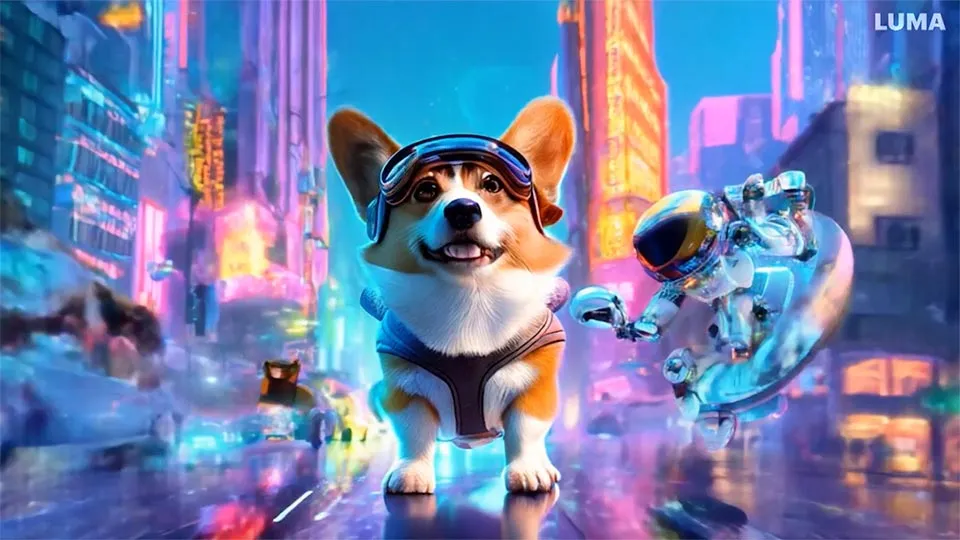
Artificial intelligence is changing the way digital content is imagined, produced, and shared. Among the technologies contributing to this transformation, AI video generation has become one of the most exciting developments. Instead of relying entirely on cameras, actors, locations, and complex editing software, creators can increasingly turn written ideas into moving visual content. Luma dream machine represents an important step in this evolution, giving creators new ways to experiment with video production through artificial intelligence.
The rise of AI video technology does not simply mean that machines can create short clips. It represents a broader change in the creative process. Ideas that once required substantial budgets and technical expertise can now be explored through accessible digital tools. As the technology continues to improve, platforms such as Luma dream machine are helping demonstrate what the future of video creation could look like.
Understanding the Evolution of AI Video
Early digital video tools focused primarily on editing footage that had already been recorded. Users could cut clips, add transitions, adjust colors, and combine audio with visual material. Later, computer-generated imagery allowed artists to create scenes that were difficult or impossible to capture with traditional cameras.
AI video generation takes another step forward by allowing software to interpret creative instructions. Instead of beginning with existing footage, a creator can describe a scene, movement, environment, or visual concept and ask an AI system to generate video content. This changes the starting point of production from recorded material to an idea.
The development of increasingly capable generative models has made this process more sophisticated. AI systems can analyze relationships between words, objects, environments, movement, lighting, and visual styles. Although generated content can still contain imperfections, improvements in realism and motion are making AI video increasingly useful for creative experimentation.
What Makes Luma Dream Machine Significant?
Luma dream machine has attracted attention because it demonstrates how generative AI can be applied specifically to video creation. Rather than requiring users to master complicated production techniques before experimenting, the technology allows them to explore concepts through natural-language instructions and visual references.
One of its most interesting possibilities is rapid ideation. A filmmaker might have an idea for a futuristic city, a dramatic landscape, or an unusual cinematic sequence but lack the resources to produce it traditionally. AI generation can provide a visual interpretation of that concept, helping the creator understand how the idea might look on screen.
This does not necessarily replace traditional filmmaking. Instead, it can function as a creative partner during development. Directors, writers, designers, marketers, and independent creators can use generated sequences to test visual directions before investing significant time and money in full production.
From Text to Moving Images
Text-to-video generation is one of the most important developments in modern AI video technology. Written descriptions can act as instructions for creating visual scenes. A prompt might describe a character walking through a rain-soaked street, a landscape changing at sunset, or an imaginary environment filled with futuristic architecture.
The challenge is translating language into coherent movement. A video model must understand not only what objects should appear but also how they should behave over time. This makes video generation more complicated than creating a single still image.
Luma dream machine illustrates the industry’s effort to solve this challenge. As models become better at interpreting prompts and maintaining visual relationships across frames, creators can gain more control over the resulting footage. Continued improvements could eventually make AI-generated sequences longer, more consistent, and more responsive to detailed creative direction.
Transforming the Creative Workflow
Traditional video production often involves multiple stages, including planning, script development, location scouting, filming, visual effects, editing, and post-production. Each stage requires time, equipment, and specialized skills.
AI video technology can change how some of these stages are approached. During pre-production, creators can generate visual concepts instead of relying solely on written descriptions or rough sketches. During experimentation, they can quickly test different compositions, environments, and moods. This can make the creative process more iterative.
The greatest advantage may be speed. Producing several visual concepts traditionally could require days of preparation. Generative AI can allow creators to explore numerous possibilities much more quickly. This encourages experimentation because unsuccessful ideas can be discarded without the same level of financial or logistical investment.
Opportunities for Independent Creators
Independent filmmakers and small creative teams may benefit significantly from advances in AI video. Large studios often have access to extensive budgets, professional crews, specialized equipment, and visual-effects departments. Independent creators typically have to work within tighter limitations.
AI tools can reduce some of those barriers. A small team could use generated visuals for concept development, promotional material, experimental films, music videos, or social media content. This does not eliminate the need for storytelling skills, but it can provide additional creative resources.
Luma dream machine can therefore be viewed as part of a broader democratization of visual production. When sophisticated video generation becomes easier to access, more people can experiment with cinematic ideas regardless of their production background.
The Importance of Human Creativity
Despite rapid technological progress, AI does not remove the importance of human creative judgment. A generated video may look impressive, but visual quality alone does not guarantee a meaningful story.
Creators still need to decide what they want to communicate, how scenes should connect, which emotions should be emphasized, and what makes a project distinctive. AI can generate possibilities, but people remain responsible for selecting, refining, and directing those possibilities.
This relationship is likely to become increasingly important. The future of AI video may not be about humans versus machines. Instead, it may involve creative partnerships in which people provide vision and context while AI helps turn ideas into visual experiments.
Challenges Along the Way
AI video technology also faces important challenges. Consistency remains a major concern. Characters, objects, environments, and movements may not always remain stable across generated sequences. Small visual errors can become noticeable when viewers watch a clip closely.
Control is another challenge. Professional filmmakers often need precise control over camera movement, timing, lighting, performances, and continuity. Generative systems may not yet provide the same level of predictable control as established production workflows.
There are also questions surrounding copyright, originality, ethical use, and the impact of automation on creative professions. As AI-generated media becomes more common, creators and technology companies will need to establish responsible practices for using these systems.
Where AI Video Technology Could Go Next
The future of AI video is likely to involve greater realism, longer sequences, improved consistency, and more precise creative controls. Instead of generating isolated clips, future systems may support complete visual workflows from concept development to editing.
AI could also become increasingly integrated with conventional production software. A creator might combine recorded footage with generated elements, modify environments, extend scenes, or produce alternative versions of the same sequence. This hybrid approach could become more practical as the technology matures.
Luma dream machine is part of this larger movement toward more flexible visual creation. Its significance lies not only in what it can produce today but also in how it represents a changing relationship between human ideas and digital production tools.
A New Era of Visual Storytelling
AI video technology is evolving from an experimental concept into a practical creative resource. The ability to transform ideas into moving images can change how people approach filmmaking, advertising, education, entertainment, and online content.
Luma dream machine highlights the possibilities of this transition by making AI-assisted video creation more approachable and encouraging creators to experiment with visual concepts. While the technology still has limitations, its development suggests that video production will become increasingly interactive and accessible.
The most important change may ultimately be the freedom to explore. When creators can test an idea without needing a complete production setup, more concepts can move from imagination toward visual form. As AI continues to evolve, the future of video may belong to workflows that combine human storytelling, artistic judgment, and intelligent generation in ways that are only beginning to emerge.