Understanding the Basic Question
The question can a portable power station run a refrigerator is becoming increasingly common as more people look for reliable backup power during outages, camping trips, and emergencies. With rising electricity costs and frequent grid failures in some regions, portable energy solutions are no longer a luxury but a practical necessity.
A refrigerator is one of the most important home appliances because it preserves food, medicine, and other perishable items. When the power goes out, the urgency to keep it running becomes immediately clear. This is where portable power stations enter the discussion, offering a clean, quiet, and convenient alternative to traditional fuel generators.
How Portable Power Stations Work
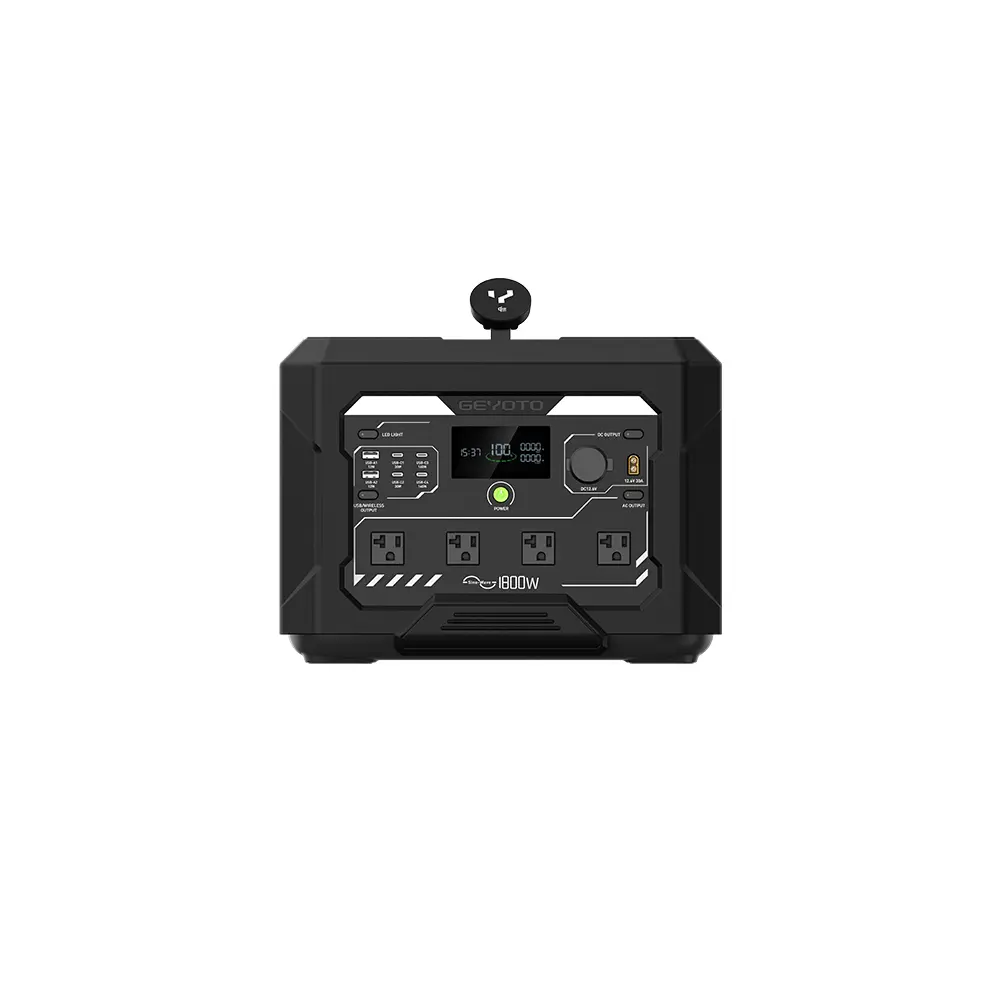
A portable power station is essentially a large rechargeable battery packed with inverter technology and multiple output ports. It stores electricity in advance and then converts it into usable AC power for household appliances.
Unlike fuel generators, portable power stations do not require gasoline, produce no fumes, and operate silently. They can be charged through wall outlets, solar panels, or car chargers.
The key components that determine performance include:
Battery capacity (measured in watt-hours, Wh)
Inverter output (continuous and surge watts)
Battery chemistry (lithium-ion or LiFePO4 for longer lifespan)
These factors directly impact whether a unit can handle something as demanding as a refrigerator.
Refrigerator Power Requirements Explained
To understand can a portable power station run a refrigerator, you first need to know how much power a refrigerator actually uses.
Most modern household refrigerators consume:
100 to 800 watts while running
600 to 1200 watts during compressor startup (surge power)
The startup surge is the most critical factor. Even if a refrigerator runs on low wattage, the compressor requires a strong burst of energy to start. Many power stations fail not because of continuous load, but because they cannot handle this surge.
Smaller mini-fridges are easier to support, while large double-door refrigerators require more powerful systems.
Matching a Portable Power Station to a Refrigerator
When evaluating can a portable power station run a refrigerator, the answer depends on the size of both devices.
A portable power station with 300–500Wh capacity may only run a small fridge for a short time, possibly 2–4 hours. However, a larger 1000–2000Wh unit can keep a standard refrigerator running for 8–20 hours depending on usage cycles.
For long-term backup, high-capacity stations above 2000Wh combined with solar charging can extend runtime significantly.
Key requirements to look for:
At least 1000W continuous output for standard refrigerators
2000W+ surge capability for compressor startup
Battery capacity of 1000Wh or more for meaningful backup time
Without these specifications, performance may be limited or unstable.
Real-World Performance Scenarios
In real-life usage, answering can a portable power station run a refrigerator depends on behavior patterns, not just specifications.
Scenario 1: Emergency Home Backup
During a blackout, a 1500Wh power station can typically run a refrigerator for about 10–15 hours if the door is not frequently opened. This is usually enough to bridge short outages.
Scenario 2: Camping or RV Use
In off-grid travel, smaller fridges or portable coolers are more energy-efficient. A mid-range power station can easily maintain cooling throughout the night, especially when paired with solar panels.
Scenario 3: Extended Outage with Solar Support
When solar panels are used, a portable power station can continuously recharge during the day while powering the fridge at night. This setup can sustain refrigeration indefinitely under good sunlight conditions.
Factors That Affect Runtime
Even if the answer to can a portable power station run a refrigerator is yes, runtime varies widely based on several factors.
Ambient temperature plays a major role. Hot environments force the compressor to run more frequently, increasing energy consumption.
Frequency of door opening also matters. Each time the door opens, cold air escapes and the compressor must work harder to restore temperature.
Efficiency of the refrigerator is another factor. Newer inverter-based refrigerators consume significantly less power compared to older models.
Finally, battery efficiency and inverter losses (typically 10–15%) reduce total usable energy.
Common Mistakes People Make
Many users misjudge whether can a portable power station run a refrigerator because of avoidable mistakes.
One common mistake is focusing only on watt-hours without checking surge capacity. Even a large battery will fail if it cannot handle compressor startup spikes.
Another mistake is assuming all refrigerators use the same amount of energy. In reality, energy consumption varies dramatically between compact mini-fridges and large family-sized units.
Some users also overlook the importance of cable quality and connection type, which can affect performance stability.
Best Practices for Reliable Operation
To get the best results when using a portable power station with a refrigerator, a few strategies help significantly.
Keep the refrigerator as full as possible, since stored cold items help maintain temperature longer. Avoid unnecessary door opening during outages.
Pre-cool the fridge before connecting it to the power station so it starts from a lower temperature baseline.
If possible, use energy-saving modes or adjust thermostat settings slightly higher during backup operation.
For long outages, consider combining the power station with solar panels to extend runtime.
Final Verdict
So, can a portable power station run a refrigerator? The answer is yes, but with conditions.
Small and mid-sized refrigerators can be powered effectively by modern portable power stations, especially those with high surge capacity and at least 1000Wh storage. For larger refrigerators or longer outages, higher-capacity units combined with solar charging provide the best results.
In real-world usage, portable power stations are not just capable—they are increasingly practical for keeping essential appliances like refrigerators running during emergencies, outdoor trips, and off-grid living.