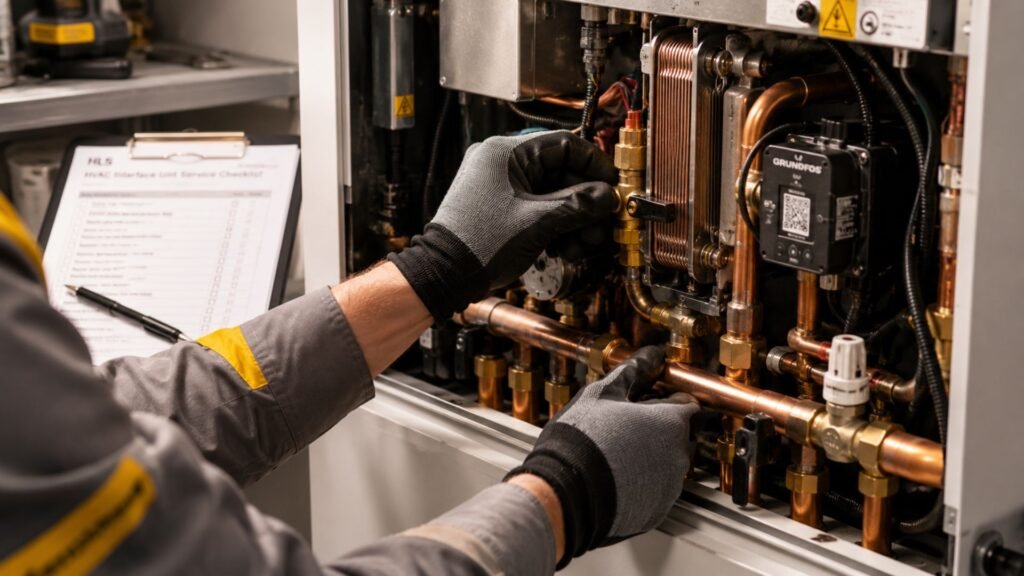
Heat Interface Units (HIUs) play an important role in many modern residential developments across London. They provide heating and hot water to individual properties while connecting them to a central energy system. When an HIU develops a fault, residents may experience inconsistent heating, poor hot water performance, unusual noises, pressure issues, or complete loss of service. If the same problems keep returning, simply repairing the visible fault may not be enough. Understanding the underlying causes can help property owners and managers arrange more effective HIU repair London and reduce recurring problems.
Understanding Why HIU Faults Keep Returning
Repeated faults can happen for several reasons. An HIU contains multiple components that must work together, including valves, heat exchangers, pumps, filters, sensors, controls, and electrical connections. A problem with one component can affect the operation of others.
In some cases, a technician may replace a failed component and restore the system temporarily, but an underlying issue may remain. For example, restricted water flow could place additional strain on components, causing another failure later. This is why recurring faults should be investigated rather than treated as isolated incidents.
Poor Water Quality and System Contamination
How Debris Can Affect HIU Performance
Water quality is an important factor in the long-term operation of an HIU. Dirt, sludge, scale, and other contaminants can enter or develop within a heating system. These materials can restrict flow through filters, valves, pumps, and heat exchangers.
A partially blocked filter may initially cause reduced performance rather than a complete failure. If the issue is not addressed, pressure and temperature performance may continue to deteriorate. Repeated cleaning or replacement without identifying the source of contamination can result in ongoing service requirements.
Professional HIU repair London can include checking relevant components for signs of contamination and identifying whether cleaning, flushing, or component replacement is appropriate.
Scale Build-Up in Heat Exchangers
Why Hard Water Can Create Problems
London’s water supply can contribute to limescale formation, particularly in domestic hot water components. Over time, mineral deposits may accumulate inside heat exchangers and restrict heat transfer.
When a heat exchanger becomes affected by scale, residents may notice that hot water takes longer to reach the desired temperature or does not remain consistently hot. The HIU may also have to work harder to achieve the required output.
If scale is repeatedly causing performance problems, replacing individual components without considering water quality and system conditions may only provide a temporary solution. A qualified technician can assess the condition of the relevant components and determine an appropriate repair or maintenance approach.
Faulty or Worn Valves
The Role of Control Valves
Valves regulate the movement of water through an HIU. If a valve becomes worn, stuck, damaged, or incorrectly adjusted, the unit may struggle to maintain the correct temperature or flow.
A valve problem can sometimes appear similar to a problem with another component. For example, insufficient heating may be linked to restricted flow rather than a faulty heat exchanger.
Repeated valve failures may also indicate wider system conditions that should be investigated. Correct diagnosis is therefore important when arranging HIU repair London, particularly where the same component has already been replaced several times.
Pump Problems and Flow Restrictions
Why Circulation Matters
Adequate water circulation is essential for an HIU to operate effectively. Pumps help maintain the required flow through the system. If a pump becomes worn or obstructed, heating and hot water performance can suffer.
Flow restrictions may also occur because of blocked filters, partially closed valves, incorrect settings, or system debris. Simply replacing a pump without checking these surrounding conditions may not prevent another failure.
A detailed inspection can help determine whether the pump itself is responsible or whether another issue is placing unnecessary demand on it.
Sensor and Control Failures
Incorrect Temperature Readings
Modern HIUs rely on sensors and electronic controls to monitor temperature and regulate operation. If a sensor becomes faulty or provides inaccurate readings, the system may respond incorrectly.
For example, an incorrect temperature signal could cause heating or hot water production to stop prematurely. It could also result in inefficient operation or repeated fault codes.
Electrical connections, wiring, sensors, and control components should therefore be considered when faults appear intermittent or difficult to reproduce. Accurate diagnostics are particularly valuable when residents report that an HIU works normally at certain times but repeatedly stops under specific conditions.
Pressure and System Imbalances
How Pressure Can Influence Performance
Pressure-related problems can contribute to repeated HIU faults. An abnormal pressure condition may indicate an issue elsewhere in the heating network or within the property system.
Pressure fluctuations can affect valves, circulation, and overall system performance. In larger developments, differences between individual apartments can sometimes point toward wider balancing or distribution issues rather than isolated HIU failures.
A professional assessment should consider the HIU alongside the wider system conditions. This approach can help distinguish between a unit-specific problem and a building-level issue.
Incorrect Installation or Previous Repairs
Why Repair Quality Matters
Repeated faults can sometimes be connected to previous installation work or repairs. Incorrectly fitted components, unsuitable replacement parts, loose electrical connections, poor settings, or improper adjustments can create problems that appear later.
If an HIU has experienced several repairs in a short period, it may be useful to review its service history. Understanding what components have already been replaced can help technicians avoid repeating unsuccessful repair strategies.
Proper installation and careful commissioning are also important because an HIU needs to operate according to its design requirements.
Lack of Preventive Maintenance
Small Problems Can Become Larger Faults
One of the most common reasons for recurring problems is insufficient maintenance. Filters can become dirty, connections can deteriorate, valves can wear, and heat exchangers can accumulate deposits over time.
Routine inspections can identify developing problems before they result in complete failure. Maintenance schedules can also help property managers keep records of recurring faults, component replacements, and service requirements.
For buildings with multiple HIUs, planned maintenance can be particularly useful because patterns may emerge across several apartments. If the same fault appears repeatedly in different units, it may indicate a shared system issue.
Incorrect System Settings
Balancing and Temperature Controls
HIUs depend on appropriate temperature, flow, and control settings. Incorrect settings can affect comfort and increase strain on components.
For example, inadequate system balancing may prevent some apartments from receiving consistent performance. Incorrect control settings can also cause unnecessary cycling or inefficient operation.
When repeated faults occur, technicians should consider whether the unit is operating under suitable conditions rather than focusing only on the component that has failed.
Building Management and Usage Factors
Identifying Patterns Across Properties
In multi-property developments, building management practices can influence maintenance requirements. If service records are incomplete, recurring faults may be treated as unrelated incidents.
Keeping accurate records of fault codes, repair dates, replaced components, resident complaints, and operating conditions can help identify patterns. Property managers can then provide technicians with useful information before an inspection.
This information can make HIU repair London more targeted because technicians can investigate recurring symptoms rather than starting from scratch with every service call.
How Professional Diagnosis Can Reduce Repeat Repairs
Repeated HIU faults require more than simply replacing whichever component appears damaged. A thorough diagnostic process should consider the unit’s components, water quality, pressure, flow, controls, installation, and wider heating network.
Technicians can inspect the HIU, review previous repair records, test relevant components, and identify conditions that may be contributing to repeated failures. The appropriate repair can then be selected based on the findings.
For property managers, this approach can reduce unnecessary replacement work and help improve long-term reliability.
Conclusion
Repeated HIU faults can have many causes, including contaminated water, scale accumulation, worn valves, pump problems, faulty sensors, pressure issues, incorrect settings, poor previous repairs, and inadequate maintenance. Identifying the underlying cause is essential when the same problem keeps returning.
Instead of repeatedly treating individual symptoms, property owners and managers can benefit from a systematic assessment of both the HIU and the surrounding heating system. Professional HIU repair London can help identify the source of recurring faults, restore performance, and support a more reliable approach to ongoing heating and hot water maintenance.