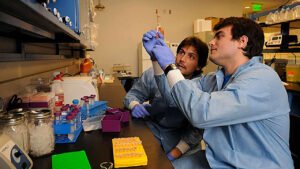
The journey from scientific research to meaningful innovation is one of the most important processes in the pharmaceutical industry. Behind every promising therapeutic concept is a combination of scientific investigation, careful experimentation, technology, quality control, and continuous learning. Intex Pharma Research represents this broader journey, where research can serve as a foundation for discovering new possibilities and developing solutions that address evolving needs in healthcare and life sciences.
Pharmaceutical research is not simply about finding a new compound or studying an existing treatment. It involves understanding biological processes, evaluating potential applications, examining safety considerations, and transforming scientific knowledge into practical opportunities. As technology continues to advance, research organizations are increasingly able to explore complex questions and develop more sophisticated approaches to innovation.
Understanding the Role of Pharmaceutical Research
Pharmaceutical research provides the scientific foundation for innovation across the healthcare sector. Researchers investigate how substances interact with biological systems, identify potential therapeutic targets, and study methods for improving existing approaches.
At the early stage, researchers may focus on understanding a particular disease mechanism or biological pathway. This knowledge can help identify opportunities for developing new treatments or improving established therapies. Laboratory studies then provide information that can guide further investigation.
The process requires patience because scientific discovery rarely follows a perfectly predictable path. Some research ideas may demonstrate strong potential, while others may require modification or may not produce the expected results. Each outcome can contribute valuable knowledge to future research.
From Scientific Questions to Research Opportunities
Innovation often begins with a question. Researchers may ask why a biological process occurs, how a particular molecule behaves, or whether a different approach could improve an existing solution. These questions can lead to carefully designed research projects.
Intex Pharma Research can be viewed within this research-to-innovation framework, emphasizing the importance of connecting scientific knowledge with practical development. A structured approach helps researchers organize objectives, select appropriate methods, evaluate findings, and determine which opportunities deserve further exploration.
The Importance of Research Planning
Effective research starts with clearly defined objectives. Researchers need to establish what they want to understand, what information is required, and how results will be evaluated.
Planning can involve reviewing existing scientific literature, identifying knowledge gaps, selecting research models, and establishing procedures for collecting and analyzing data. Thorough planning helps create a stronger foundation for later stages of development.
Technology and Modern Pharmaceutical Innovation
Technology has transformed the way pharmaceutical research is conducted. Advanced analytical instruments, computational tools, automation, data-management systems, and other technologies can help researchers process information more efficiently.
Computational methods can assist with analyzing large datasets and identifying patterns that may not be immediately visible through traditional approaches. Laboratory automation can support repetitive processes while helping researchers maintain consistent procedures. Advanced analytical techniques can also provide more detailed information about materials and biological interactions.
These developments do not replace scientific expertise. Instead, they provide researchers with additional tools for asking better questions, analyzing evidence, and exploring complex research challenges.
Data as a Foundation for Better Decisions
Modern pharmaceutical research generates substantial amounts of data. Managing this information effectively is essential because research decisions depend on accurate interpretation.
Researchers may compare experimental results, evaluate trends, identify unexpected findings, and determine whether additional investigation is necessary. Reliable data management also supports transparency and reproducibility, which are fundamental principles of scientific research.
The Development Process Behind Innovation
Moving from research to innovation requires multiple stages. An initial discovery may need extensive evaluation before it can become a practical pharmaceutical opportunity.
Early research may identify a promising concept, but additional studies are needed to understand its characteristics and potential applications. Researchers may investigate effectiveness, stability, formulation possibilities, biological activity, and other relevant factors.
The development process can therefore be viewed as a progression rather than a single event. Each stage provides information that influences subsequent decisions.
Evaluating Research Findings
Evaluation is a central part of the research process. Researchers need to determine whether experimental results support the original hypothesis and whether the findings can be reproduced.
Unexpected results can also be valuable. They may reveal limitations in an existing assumption or suggest a new direction for investigation. Scientific progress often depends on the willingness to examine both successful and unsuccessful outcomes objectively.
Quality and Consistency in Pharmaceutical Research
Quality is essential throughout pharmaceutical research. Small variations in procedures, materials, measurements, or documentation can influence experimental results.
Researchers therefore rely on carefully established protocols and appropriate quality-control practices. Accurate documentation makes it possible to understand how an experiment was performed and how its results were obtained.
Consistency is particularly important when research progresses toward development. Reliable methods help researchers compare results over time and make better-informed decisions about potential innovations.
Collaboration Drives Scientific Progress
Pharmaceutical innovation rarely happens in isolation. Research may involve scientists from different disciplines, laboratory specialists, data analysts, engineers, regulatory professionals, and other experts.
Collaboration allows different perspectives to contribute to complex research problems. A biological question may require chemical expertise, analytical knowledge, computational analysis, or specialized technological support.
Intex Pharma Research, as a concept within the pharmaceutical research landscape, highlights how scientific investigation can connect different areas of expertise. Collaboration can help transform individual findings into broader research programs and development opportunities.
Communication Across Research Teams
Clear communication is another important component of successful research. Teams need to share findings, document procedures, discuss challenges, and evaluate potential next steps.
Strong communication reduces misunderstandings and helps ensure that important information remains accessible throughout a project. It can also encourage researchers to challenge assumptions and consider alternative approaches.
The Role of Innovation in Healthcare
Innovation in pharmaceuticals has the potential to influence many aspects of healthcare. It can involve discovering new therapeutic approaches, improving formulations, developing more efficient research methods, or creating technologies that support better scientific analysis.
Not every innovation needs to represent a completely new treatment. Improvements in manufacturing, delivery systems, analytical techniques, and research processes can also have meaningful value.
The connection between research and innovation is therefore continuous. New scientific knowledge can lead to new technologies, while new technologies can create opportunities for additional research.
Looking Toward the Future
The future of pharmaceutical research is likely to be shaped by increasing collaboration between biology, chemistry, data science, artificial intelligence, engineering, and other fields. Researchers will continue to explore ways to understand biological systems more precisely and accelerate the transition from scientific concepts to practical applications.
Emerging technologies may make it possible to analyze larger datasets, investigate complex biological relationships, and improve experimental efficiency. At the same time, scientific rigor, quality, ethical considerations, and careful validation will remain essential.
Intex Pharma Research reflects the broader idea that meaningful innovation begins with disciplined research. Discoveries do not become useful innovations overnight. They progress through questions, experiments, analysis, validation, collaboration, and continuous refinement.
Conclusion
The path from pharmaceutical research to innovation is a detailed and evolving journey. It combines scientific curiosity with structured experimentation, advanced technology, reliable data, quality practices, and multidisciplinary collaboration.
Intex Pharma Research can be understood within this larger landscape of scientific exploration, where research creates opportunities for discovering new ideas and improving existing approaches. As pharmaceutical science continues to develop, the connection between careful research and practical innovation will remain central to progress in healthcare and life sciences.