Introduction to Advanced Manufacturing Precision
Modern manufacturing industries require exceptional accuracy, flexibility, and efficiency to produce complex components with demanding specifications. Traditional machining methods often struggle when manufacturers need to create intricate geometries, tight tolerances, and detailed designs. This is where 5 axis cnc machining has become a revolutionary solution, offering advanced capabilities that improve production quality and streamline manufacturing processes.
By allowing cutting tools to move along five different axes simultaneously, this technology provides manufacturers with greater control over machining operations. Aerospace, automotive, medical, robotics, and engineering industries increasingly rely on this advanced approach to create highly precise components that meet strict performance requirements. The ability to machine complicated parts in fewer setups makes 5 axis cnc machining an essential technology for businesses focused on quality and innovation.
Understanding the Technology Behind 5 Axis Machining
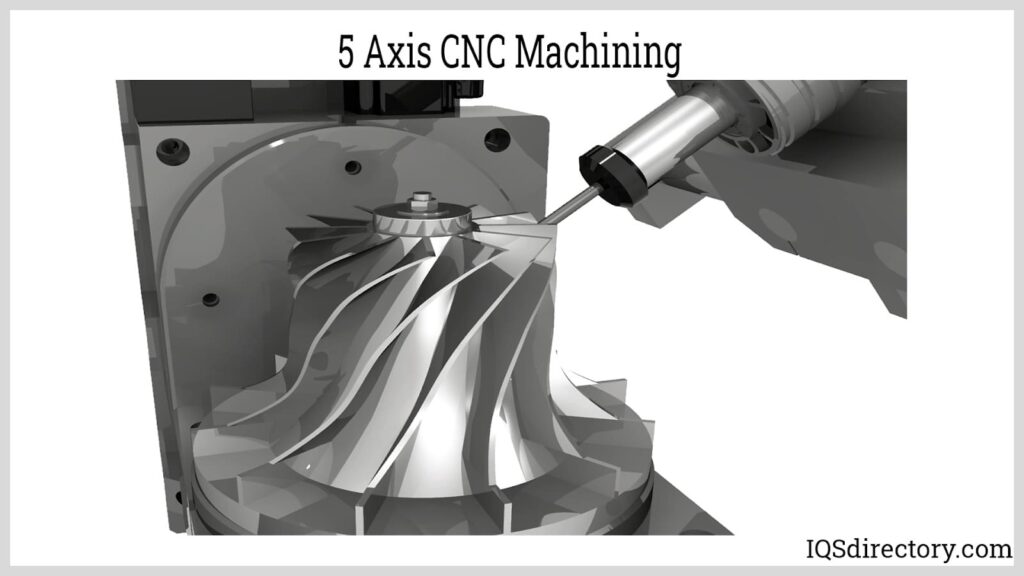
Unlike traditional three-axis machines that move along the X, Y, and Z directions, advanced machining systems add two rotational axes to achieve greater movement flexibility. These additional axes allow the cutting tool to approach the workpiece from multiple angles, making it possible to manufacture complex shapes that would be difficult or impossible with conventional equipment.
The primary advantage of 5 axis cnc machining is its ability to complete multiple machining operations without repeatedly repositioning the material. Each repositioning process can introduce errors, alignment issues, and production delays. By reducing the need for multiple setups, manufacturers can maintain higher accuracy throughout the entire manufacturing cycle.
This technology also enables shorter cutting paths and improved tool positioning. The cutting tool remains at the optimal angle against the workpiece, resulting in smoother surfaces, improved finishes, and greater dimensional accuracy.
Superior Precision for Complex Components
Precision is one of the most important factors in modern manufacturing. Industries that produce critical components cannot afford inconsistencies or measurement errors. 5 axis cnc machining provides outstanding accuracy because it minimizes human intervention and reduces the possibility of mistakes during production.
Complex components often include curved surfaces, angled holes, deep cavities, and detailed structures. Producing these features with conventional machines may require several stages and additional equipment. However, advanced five-axis systems can handle these challenges in a single operation, maintaining consistent measurements and improving overall product reliability.
For industries such as aerospace and medical manufacturing, where even minor deviations can affect performance and safety, this level of precision is extremely valuable. Manufacturers can achieve tight tolerances while maintaining excellent surface quality, ensuring that every finished component meets strict industry standards.
Improving Efficiency in Manufacturing Operations
Efficiency is another major benefit of adopting advanced machining solutions. In competitive markets, manufacturers must reduce production time while maintaining high-quality output. 5 axis cnc machining helps achieve this balance by reducing setup requirements and increasing overall productivity.
Traditional manufacturing processes may require operators to secure a part multiple times to complete different machining stages. Each setup takes additional time and creates opportunities for alignment errors. With five-axis capabilities, many operations can be completed in one continuous process.
Fewer setups mean faster production cycles, lower labor requirements, and reduced operational costs. Businesses can manufacture complex components more efficiently while using resources more effectively. This makes advanced CNC technology an attractive investment for companies looking to improve their manufacturing capabilities.
Enhanced Surface Finishes and Design Flexibility
One of the most significant advantages of 5 axis cnc machining is its ability to produce superior surface finishes. The continuous movement of the cutting tool allows smoother transitions and reduces the need for additional finishing processes.
Manufacturers can create detailed designs with complex curves, irregular shapes, and precise features without compromising quality. Designers also gain more freedom because they are no longer limited by the restrictions of traditional machining methods.
This increased flexibility supports innovation across various industries. Engineers can develop lightweight structures, optimized components, and advanced product designs that improve functionality and performance. The ability to transform complex digital models into accurate physical parts has changed the possibilities of modern manufacturing.
Applications Across Different Industries
Many industries depend on high-precision machining to create specialized products. In aerospace manufacturing, complex engine components, structural parts, and lightweight assemblies require exceptional accuracy. Five-axis machining allows manufacturers to produce these critical parts with consistent quality.
The automotive sector also benefits from this technology by using it for performance components, prototypes, and custom designs. Manufacturers can quickly produce detailed parts while maintaining strict engineering requirements.
Medical device companies use advanced machining methods to create surgical instruments, implants, and specialized equipment. These applications require precise dimensions and smooth surfaces, making accurate CNC technology essential.
The robotics and electronics industries also utilize this approach to manufacture small, intricate components that require extreme detail and reliability.
Reducing Material Waste and Production Challenges
Efficient material usage is becoming increasingly important for manufacturers. 5 axis cnc machining helps reduce waste by optimizing cutting strategies and improving tool movement. The ability to approach materials from different angles allows manufacturers to remove only the necessary amount of material.
This efficiency is especially beneficial when working with expensive materials such as titanium, aerospace alloys, and specialized metals. Reducing waste not only lowers production costs but also supports more sustainable manufacturing practices.
Additionally, fewer machining stages reduce the risk of defects and improve workflow management. Companies can achieve better consistency across production batches while maintaining faster delivery schedules.
The Role of Advanced Software and Automation
Modern CNC systems rely heavily on advanced software to maximize performance. Computer-aided manufacturing programs help engineers create accurate machining instructions, simulate operations, and identify potential issues before production begins.
When combined with automation, 5 axis cnc machining provides even greater productivity. Automated tool changes, real-time monitoring, and intelligent programming allow manufacturers to maintain consistent quality with minimal downtime.
These technological improvements enable businesses to handle increasingly complex projects while meeting customer expectations for speed and accuracy.
Future Growth of 5 Axis CNC Machining
As industries continue to demand more advanced products, the importance of precision manufacturing will continue to grow. Companies are investing in smarter machines, automation technologies, and improved production methods to remain competitive.
The future of manufacturing will depend on technologies that combine accuracy, efficiency, and flexibility. 5 axis cnc machining represents one of the most powerful solutions available for producing complex components with exceptional quality.
From aerospace innovations to medical breakthroughs, this technology continues to expand what manufacturers can achieve. Its ability to deliver superior precision, reduce production challenges, and support advanced designs makes it a key part of the next generation of manufacturing.
Conclusion
Complex manufacturing projects require solutions that provide accuracy, efficiency, and design freedom. 5 axis cnc machining delivers these advantages by enabling multi-directional cutting, reducing setups, improving surface finishes, and supporting highly detailed components.
As industries continue to evolve, manufacturers will increasingly depend on advanced CNC technologies to meet higher standards and produce innovative products. With its ability to transform complex designs into precise finished components, five-axis machining remains a vital tool for modern manufacturing success.